English Books


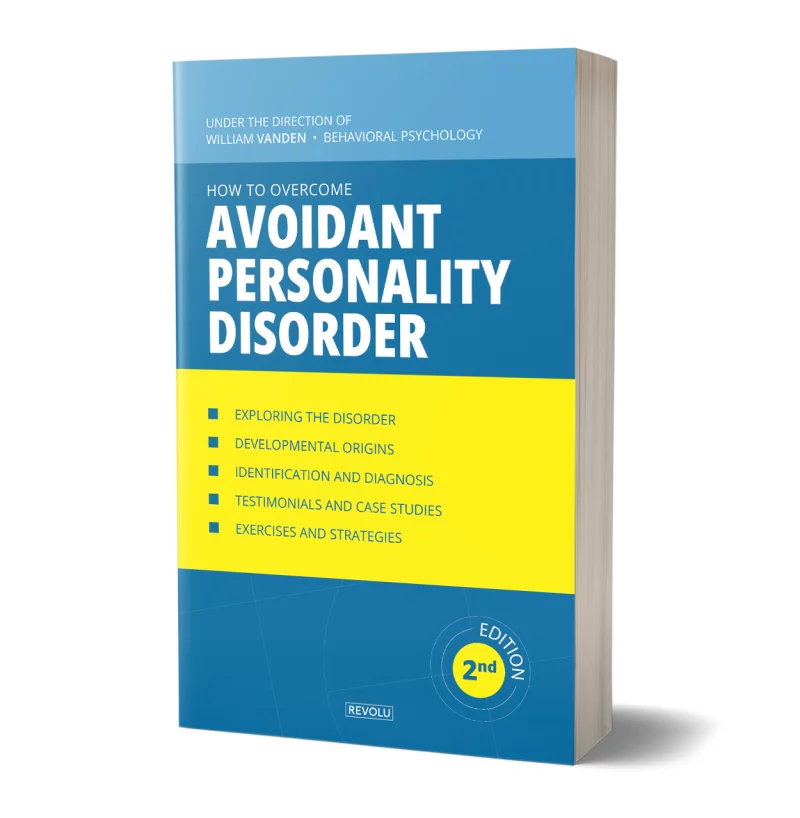
How to Overcome Avoidant Personality Disorder
A Handbook of Applied Psychology
Format broché
16,99 €
Format Kindle
8,99 €
Présentation
What if turning down that invitation had nothing to do with preferring your own company? Wanting connection and being unable to reach for it is not shyness, and it is not a personality quirk that will loosen with time. It is a recognized pattern, described in the clinical literature, that quietly shapes careers, friendships, and entire decades — and it survives precisely because backing out works so well in the moment. This book examines that pattern from the inside out: where it comes from, why relief keeps it alive, what separates it from introversion and social anxiety, and how it is identified and assessed. It follows four composite trajectories through school, work, love, and late reckoning, then turns to what the research says actually moves. The distinction it keeps returning to is a simple one that changes everything: the difference between not wanting people, and wanting them and being stopped. Readers who have spent years assuming the problem was a character flaw will find something more workable than that — a mechanism, described in detail, and the questions worth asking about their own.Sommaire
Introduction
Understanding the Disorder
More Than Shyness
The Mechanics of Avoidance
The Disorder in Daily Life
Developmental Origins
The Wounds of Childhood
How Shame Is Built
Unconscious Defenses and Repetition
Recognition and Diagnosis
Recognizing the Signs in Yourself
The Clinical Diagnosis
Distinguishing Related Conditions
Case Studies
When Avoidance Runs a Life
Paths to Change
Exercises and Strategies
Laying the Groundwork
Spotting and Correcting Your Thoughts
Calming the Body
Exposure and Assertiveness
Holding the Gains
Extrait
More Than Shyness A thirty-eight-year-old woman has spent eleven years in a job she is overqualified for. She has turned down two promotions. The first time, she cited family reasons. The second time, she cited nothing at all — she simply let the application deadline pass. What she told no one is that the position involved running a monthly meeting in front of fifteen people, and that she had spent the nights after the offer imagining the moment her voice would break. Nobody around her would use the word disorder. They would say she isn’t ambitious, or that she keeps to herself. She says it that way too. But what happened had nothing to do with temperament: it was a life decision made by a fear, and that fear follows a script that has been repeating since she was a teenager. What Avoidance Covers Avoidant functioning isn’t confined to the big social occasions. It settles into four areas that come up with real regularity. The first is work. It means keeping a distance from anything that involves sustained interpersonal contact: managing, presenting, negotiating, representing. Career choices tend to steer, without anyone putting it into words, toward technical positions, background tasks, roles where you produce without being watched producing. The second is relationships. Someone with an avoidant pattern commits to a connection only on the condition of being certain they’re wanted. Since that certainty is impossible to obtain, they wait for signals that are large, repeated, and unambiguous. A friend who asks three times gets an answer; a friend who asks once is read as having withdrawn the offer. The sorting happens that way, without anyone knowing it’s happening. The third is intimacy. Showing yourself means handing something over, and handing something over exposes you to ridicule. So the restraint reaches into even the closest ties: you talk about facts, rarely about yourself, never about anything that might come off as naive or excessive. The fourth is novelty. Any unfamiliar situation gets treated as an exam. A first class at the gym, a move, a change of team, an unfamiliar office: each one triggers an anticipation out of all proportion — not because the situation is objectively difficult, but because it contains the unknown of being looked at. Those four areas share the same logic. The fear never attaches to the event itself. It attaches to what the event might reveal. Two traits accompany them almost invariably, and both deserve to be named, because both pass for virtues. The first is social hypervigilance. In the moment, attention goes less to the conversation than to the indicators of disapproval: an eyebrow, a gaze that drifts, a silence a second too long. That monitoring consumes so many resources that it genuinely degrades the quality of the exchange, which then produces more signals to interpret. The vigilance manufactures part of what it’s looking for. The second is defensive perfectionism. It consists of never releasing anything that could be found at fault: a report reworked six times, a message reread before sending, a sentence rehearsed before it’s spoken. It is frequently praised at work, which conceals what it’s for. It doesn’t aim at excellence; it aims at offering no purchase. How It Takes Hold The disorder doesn’t begin on a date. It builds by sedimentation, generally between adolescence and the early twenties, at the point when the social image of the self is setting. Adolescence supplies the conditions: the group becomes the body that validates, appearance takes on an importance it didn’t have, and social errors are paid for on the spot. A teenager who is already reserved and who goes through a stretch of exclusion or mockery learns a rule that is simple and effective — being unobtrusive protects you — and never gets another occasion to reexamine it. Entering adult life confirms more than it corrects. College, a first job, a move to a new city are all occasions when you would have to build new ties from nothing. Every occasion missed reduces, by a little, the stock of corrective experiences available. The pattern then stabilizes, and it’s that stability that justifies talking about personality rather than an episode. It also accounts for an observation clinicians make often: an avoidant adult of forty-five describes exactly the same mechanisms as at eighteen, with a more precise vocabulary and an added layer of resignation. Shyness, Introversion, and Disorder The most common confusion is to file all of this under the word shyness.