English Books


This manual takes you through schema therapy from its theoretical foundations to its concrete clinical applications. You'll work through early maladaptive schemas, schema modes, and core emotional needs — and how they fit together into a coherent account of psychological functioning.
Three parts structure the progression: the theoretical framework, the therapy in practice, and specific clinical applications. Every chapter alternates conceptual explanation with practical guidance, so the techniques can move into your caseload rather than staying on the page.
The clinical section covers the major presentations — anxiety, depression, addiction, and personality disorders — with detailed protocols and case material. Dedicated chapters on disorganized attachment and dissociation, on the Critical Parent mode, and on case conceptualization give you tools for the situations that don't resolve.
Accessible throughout, with focus boxes, comparison tables, and worked cases that make the concepts immediately usable.
Written for therapists new to the approach and for experienced clinicians looking to deepen what they already do.
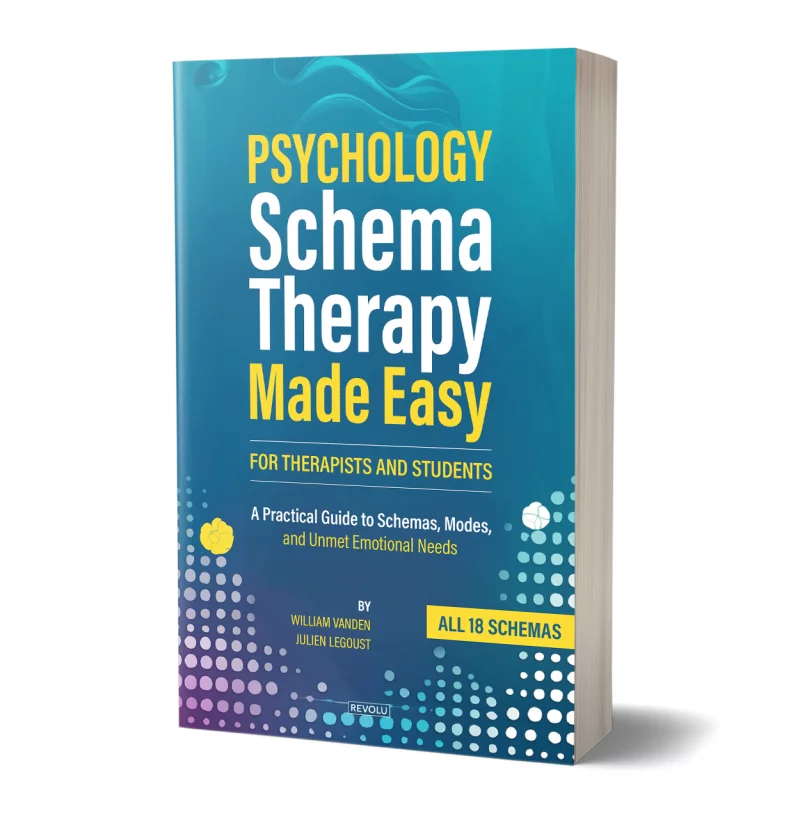
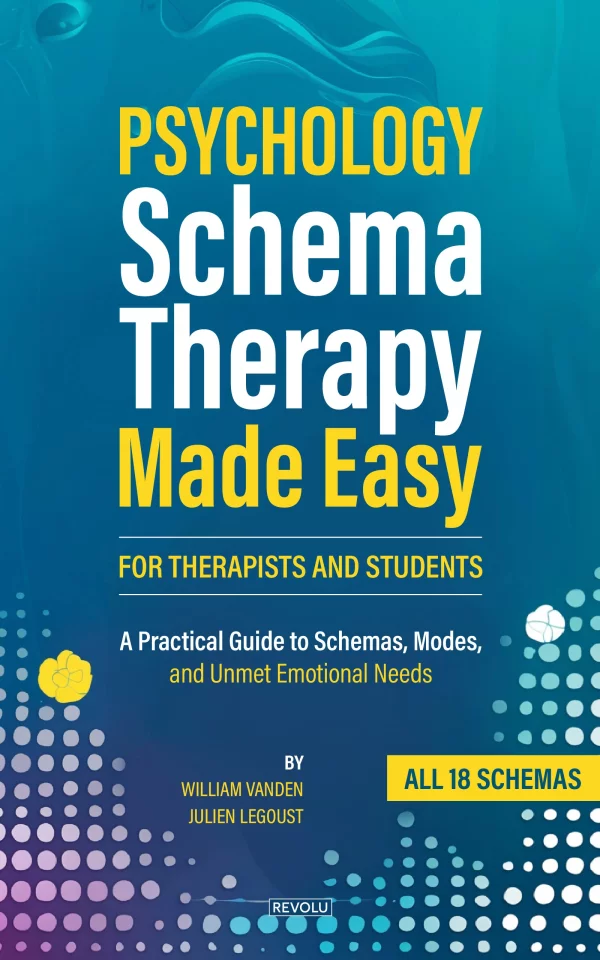
Schema Therapy Made Easy
A Practical Guide to Schemas, Modes, and Unmet Emotional Needs for Therapists and Students
Format broché
34,50 €
Présentation
How do you reach the patients other approaches don't?This manual takes you through schema therapy from its theoretical foundations to its concrete clinical applications. You'll work through early maladaptive schemas, schema modes, and core emotional needs — and how they fit together into a coherent account of psychological functioning.
Three parts structure the progression: the theoretical framework, the therapy in practice, and specific clinical applications. Every chapter alternates conceptual explanation with practical guidance, so the techniques can move into your caseload rather than staying on the page.
The clinical section covers the major presentations — anxiety, depression, addiction, and personality disorders — with detailed protocols and case material. Dedicated chapters on disorganized attachment and dissociation, on the Critical Parent mode, and on case conceptualization give you tools for the situations that don't resolve.
Accessible throughout, with focus boxes, comparison tables, and worked cases that make the concepts immediately usable.
Written for therapists new to the approach and for experienced clinicians looking to deepen what they already do.
Sommaire
The Foundations of Schema Therapy
The Theoretical Framework
History and Conceptual Evolution
Core Principles and Founding Assumptions
Early Maladaptive Schemas
Dysfunctional Coping Styles
Schema Modes
Core Emotional Needs
Panksepp’s Primary Emotional Systems
The Therapy in Practice
Phases and Structure of Treatment
Assessment and Schema Diagnosis
Cognitive Techniques
Experiential and Emotion-Focused Techniques
Behavioral Pattern-Breaking Techniques
The Therapeutic Relationship and Limited Reparenting
Brainspotting and Therapeutic Resources
The Comprehensive Resource Model
Clinical Applications
Treating Anxiety Disorders
Treating Depressive Disorders
Treating Addictive Disorders
Treating Personality Disorders
Disorganized Attachment and Dissociation
The Critical Parent and Its Punitive Origins
Case Studies and Practical Exercises
Extrait
Psychotherapy is at a crossroads. Caseloads are increasingly weighted toward people whose difficulties are chronic, layered, and resistant to short protocols, and the standard tools do not always reach them. Schema therapy emerged in exactly that gap. It is an integrative approach built to address the recurring psychological problems that outlast conventional treatment. The approach did not arrive fully formed. It grew out of what wasn’t working. Jeffrey Young, an American psychologist trained directly under Aaron Beck, spent the early part of his career applying cognitive behavioral protocols with real fidelity—and watching a subset of patients fail to improve. They understood the cognitive restructuring. They could articulate their distortions accurately. And nothing changed at the emotional level. By the 1990s, Young had built a model to explain why. What makes schema therapy distinctive is the synthesis. Young drew the emphasis on cognition and structured intervention from CBT, the focus on early experience and unconscious relational patterns from psychoanalysis, the framework for how early bonds shape adult relating from attachment theory, and the experiential methods—chairwork, imagery—from Gestalt therapy. This was not eclecticism. The elements cohere around a single organizing construct: the early maladaptive schema, a deep emotional and cognitive structure laid down in childhood that continues to shape adult experience. Four features set the approach apart from standard cognitive behavioral work. It is developmental. It explains how early experience produces structures that then filter perception, emotion, and behavior across the lifespan, rather than treating current dysfunctional thoughts as the starting point. It is dimensional rather than categorical. Patients are described by the configuration and intensity of their schemas and modes, not sorted into diagnostic boxes—an approach that fits personality disorders far better than the categorical alternative. It treats the therapeutic relationship as the primary vehicle of change, formalized in the concept of limited reparenting: meeting, within ethical bounds, the core emotional needs that went unmet in childhood. And it uses experiential techniques powerful enough to shift schemas at the level where they actually live—in emotion and body, not only in propositional belief. How this book is organized Part I lays out the theoretical framework—schemas, coping styles, modes, and the core emotional needs that underwrite all of them. It also incorporates work from affective neuroscience, particularly Jaak Panksepp’s primary emotional systems, which gives the schema model a firmer biological footing than it had in its first decade. Part II covers the therapy in practice: the phases of treatment, assessment, and the cognitive, experiential, and behavioral techniques that constitute the working core of the method. Two adjunct approaches appear here—David Grand’s Brainspotting and Lisa Schwarz’s Comprehensive Resource Model. Both work more directly on traumatic memory as it is held in the body and the subcortical brain, and both extend what is possible with deeply entrenched schemas. Part III applies the model to specific clinical presentations: anxiety, depression, addiction, personality disorders, dissociation and controlling attachment, and the punitive parent mode. Detailed case material runs throughout, so that the method arrives in a form you can use on Monday morning. Who this book is for The organizing principle is accessibility without dilution. Sophisticated approaches are too often written in a register so technical that practitioners cannot absorb them. This book decomposes each element of schema therapy into workable steps, with clear explanation, clinical example, and structured exercise—while preserving the conceptual richness that makes the model worth learning in the first place. Graduate students in psychology and counseling will find a structured, complete introduction to a major approach, laid out to support progressive learning. Experienced clinicians will find depth, plus techniques and concepts that may be newer than their original training. Even therapists already certified in schema therapy should find recent developments here—particularly the material on dissociation, disorganized attachment, and the punitive parent mode, all of which reflect the model’s evolution toward better handling of complex trauma. A word on scope of practice. Schema therapy is a psychotherapeutic method. Its use with the clinical populations described in Part III assumes appropriate training, credentialing, and supervision. Licensure requirements for the practice of psychotherapy vary by state in the United States, and titles such as psychologist, counselor, and therapist are protected differently across jurisdictions. Readers should work within the scope defined by their own license and state board. Nothing here substitutes for formal training in schema therapy, which is available through certified programs affiliated with the International Society of Schema Therapy.1 Schema therapy continues to develop through research and accumulated clinical experience.