English Books


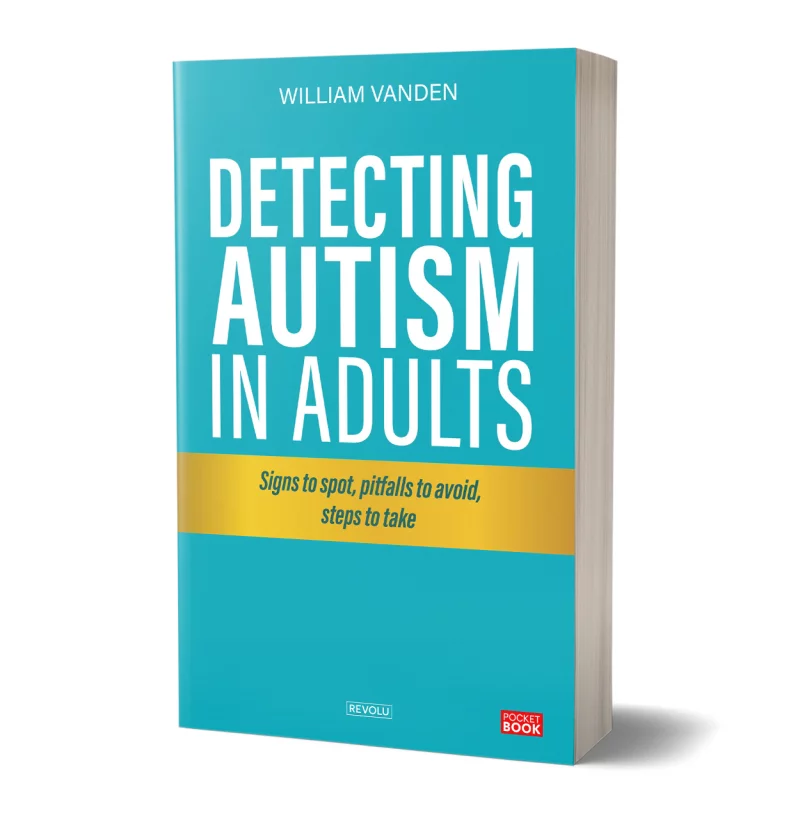
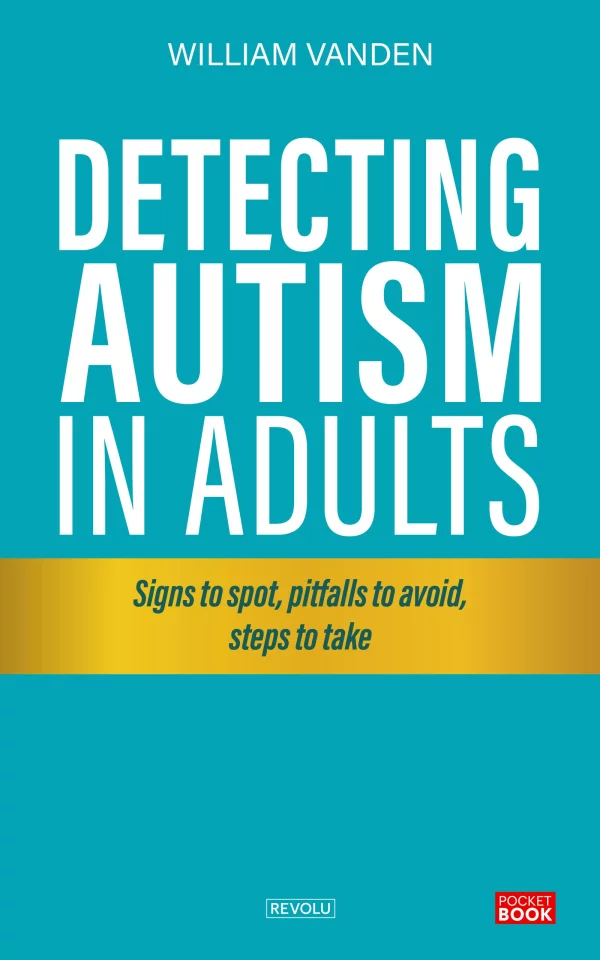
Detecting Autism in Adults
Signs to spot, pitfalls to avoid, steps to take
Format broché
14,99 €
Format Kindle
8,99 €
Présentation
What if the difficulties you have observed for years in a loved one had an explanation no one ever considered? Thousands of adults live with an undiagnosed autistic profile, hidden behind a string of labels — depression, anxiety, personality disorder — without the right question ever being asked. This guide gives partners, parents, general practitioners, nurses, social workers and teachers a structured observation framework to spot the signs of the autism spectrum in everyday life. How do you tell a discreet autistic profile from an anxiety disorder or a personality trait? How do you distinguish autism from ADHD or a personality disorder? How do you raise the subject with the person concerned without provoking rejection? How do you steer them toward the right contact within the French care system? Every situation is approached with concrete scenarios, observation grids, warning signals and clinical markers made accessible to everyone. This book does not make a diagnosis. It gives those who live with, support or care for a possibly autistic adult the tools to formulate the hypothesis no one has yet dared to formulate.Sommaire
Why we need to rethink autism in adulthood
Understanding the autism spectrum today
Defining the autism spectrum without oversimplifying
Telling visible presentations apart from subtle ones
Recognizing prolonged social camouflage
Observing the signs in everyday life
Spotting persistent relationship difficulties
Decoding ordinary behavioral rigidities
Identifying sensory particularities in daily life
Analyzing atypical emotional reactions
Spotting specific interests in adults
Distinguishing autism from other conditions
Distinguishing autism, social anxiety and phobia
Separating the autism spectrum from ADHD
Ruling out a personality disorder
Considering the female-specific features of the spectrum
Spotting the frequently associated comorbidities
Supporting the path toward formal diagnosis
Raising the subject without rushing the person
Gathering the observations useful to the clinician
Understanding the standardized assessment tools
Navigating the diagnostic pathway
Understanding the full neuropsychological assessment
Extrait
Only twenty years ago, raising the idea of autism in an adult produced bafflement at best, a shrug at worst. Autism was a matter for children, for child psychiatrists, for special-needs classrooms. An adult who functioned – who worked, lived as part of a couple, raised children – could not be autistic. This certainty, shared by a large part of the medical profession as much as by the general public, rested on a view of the autism spectrum that is obsolete today. Its direct consequence was to leave entire generations of adults without an answer to a diffuse but persistent feeling: that of never quite functioning like everyone else, without understanding why. Over the past ten years or so, something has shifted. Clinics specializing in the diagnosis of autism in adults are overwhelmed with requests. Waiting lists grow longer month after month, sometimes beyond two years in certain regions. This phenomenon is not the product of a fashion or of a trend toward self-diagnosis made easier by social media, even if these platforms play an undeniable role in spreading information. It reflects a deep-seated movement, driven by the evolution of scientific knowledge and by the complete overhaul of the diagnostic criteria that define what we mean by autism spectrum disorder1. The international classifications have profoundly reshaped their approach over the past decade. Where several separate categories were once distinguished, we now speak of a single continuum, of a spectrum with infinitely variable manifestations. This revision is not a mere change of label. It opened the door to recognizing profiles that, under the old system, ticked no box: adults with fluent language, with average or above-average intelligence, able to maintain a seemingly ordinary social life, but who pay the price of that adaptation through chronic exhaustion, pervasive anxiety or recurring depressive episodes. The problem is that collective representations have not evolved at the same pace as the science. For many people – including many health professionals whose initial training did not incorporate these advances – autism remains tied to the image of a child who does not speak, who rocks back and forth, who does not make eye contact. That image exists, it corresponds to a clinical reality, but it represents only a fraction of the spectrum. To stop there is to ignore all those who learned, often from early childhood, to mask their particularities in order to conform to the expectations of their surroundings. It is to ignore the forty-five-year-old woman who accumulates one diagnosis of depression after another with no lasting improvement. It is to ignore the brilliant engineer whose colleagues find he «lacks people skills » without ever wondering where that gap comes from. It is to ignore the spouse who has lived for years with the confused feeling that something in the relationship escapes them, without being able to name it. This book is addressed to you who live with, support or care for an adult in whom you perceive particularities you cannot explain. You may be the husband or wife who has observed incomprehensible reactions for years. You may be the parent who, on learning of a grandchild’s diagnosis, begins to recognize similar traits in your own adult son or daughter. You may be a general practitioner faced with a patient whose recurring complaints – unexplained fatigue, treatment-resistant anxiety, chronic difficulties at work – find no satisfactory diagnostic framework. You may be a psychiatric nurse, a social worker, a human resources manager or a lecturer in higher education, and you regularly find yourself in situations where a person’s way of functioning strikes you without your having the tools to put it into words. It is essential to state from the outset what this book is and what it is not. This guide in no way replaces a diagnosis made by a qualified professional. Diagnosing autism in an adult is a complex clinical act that requires specific training, standardized tools and an in-depth assessment of the person’s developmental history. This book will not turn you into a clinician, and it makes no claim to do so. What it does offer is something most available works do not provide: a structured observation framework, concrete and usable day to day, that will allow you to spot signals that are often rendered invisible, downplayed or wrongly attributed to other causes. Detection is not diagnosis. To detect is to observe methodically, to know what to look at and how to interpret what one sees.